
Programs Unit
Programs Overview
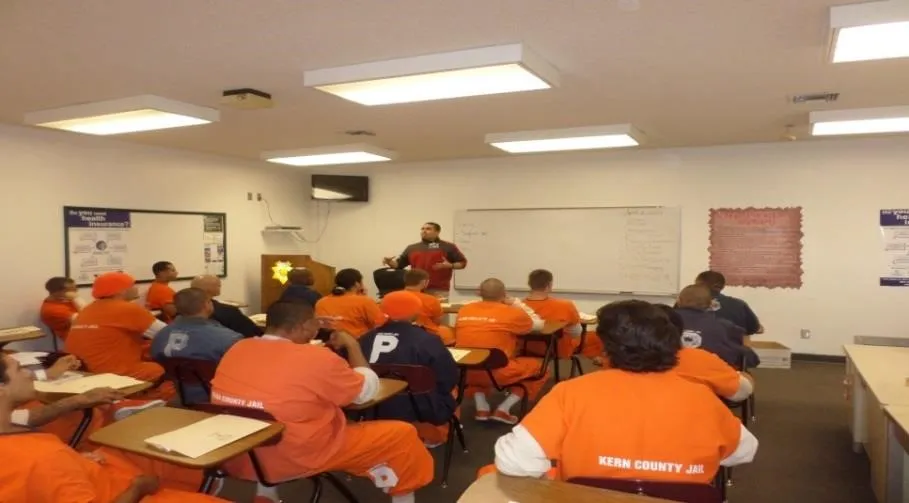
The Kern County Sheriff’s Office has established a Detentions Bureau Programs Section containing a Programs /AB109 unit. Under the umbrella of the Programs Section the AB109 unit works in collaboration with several community-based organizations and other governmental agencies to provide educational, vocational, and evidence-based programs to in-custody population.
Evidence Based Programs (EBP)
Evidence-based programs (EBP) are programs that are proven to be effective in reducing recidivism when delivered with complete fidelity. EBP’s have had success in creating positive impact by creating prosocial behaviors.
Residential Substance Abuse Treatment (RSAT)
The RSAT program is a grant funded program using Matrix curriculum. RSAT is facilitated by a 100-day treatment program. It includes substance abuse treatment disorder education, case management, employment preparation with the objective of changing criminal thinking and reducing recidivism. RSAT incorporates an in-custody treatment component with multiple evidence-based curriculums, a reintegration plan, and aftercare services which include housing and community-based treatment. The goals and objectives of the RSAT program directly align with the Sheriff’s goals in reducing recidivism and connecting released inmates with the available social services in the community.
Matrix Program
The Matrix Model is an evidence-based intensive drug treatment program which teaches inmates about their addiction and helps them identify and examine ways to cope with high-risk situations that lead to relapse. The goal is to create a setting for learning new skills to manage recovery. Inmates attend alternating individual and group sessions as the inmate moves through the stages of recovery.
Moral Reconation Therapy (MRT)
MRT is an evidence-based, cognitive behavioral treatment strategy designed specifically for offender populations. The purpose of MRT is to instill and develop higher levels of moral reasoning in inmates, which leads to moral thinking and behavior. Essentially, MRT teaches the offender to view his actions in relation to society, rather than his own immediate impulses and desires. Offenders learn to abandon their hedonistic, self-centric worldview to become pro-social thinkers and doers – in other words, to become productive, contributing members of society. Over a 20-year span, multiple studies have found that MRT graduates experience a recidivism reduction rate of 25% - 75%, depending on the age and type of offender.
Aggression Replacement Therapy (ART)
Aggression Replacement Training (ART) is a multi-component cognitive-behavioral treatment to promote pro-social behavior by addressing factors that contribute to aggression, including limited interpersonal social and coping skills, impulsiveness, over-reliance on aggression to meet daily needs, and egocentric and concrete values. Aggression Replacement Training has consistently shown positive outcomes across a number of quasi-experimental studies including; reducing criminal behavior, decreased problem behaviors, increasing pro-social behaviors and improved anger control.
CalAIM (California Advancing and Innovating Medi-Cal)
CalAIM is a statewide health care transformation initiative aimed at improving health outcomes and addressing social determinants of health for Medi-Cal members. A key component of CalAIM focuses specifically on supporting justice-involved populations.
Under this initiative, eligible individuals incarcerated in California county jails can begin receiving targeted Medi-Cal–covered health care services up to 90 days before their release. The goal is to create a smoother transition from custody to community-based care, reducing gaps in treatment and lowering the risk of medical or behavioral health crises upon release.
These pre-release services can include:
- Comprehensive care management and care planning
- Behavioral health treatment coordination
- Substance use disorder treatment referrals and linkage
- Assistance with securing medications and follow-up appointments
- Help accessing housing support, social services, and community-based providers
- Reinstatement or activation of Medi-Cal coverage so benefits are in place on day of release
In addition these Vocational and Educational Classes are also offered
- Anger Management
- Domestic Violence Intervention Program
- Substance Abuse Program
- Computer
- GED
- Health
- Food Service/ServSafe Certification
- Horticulture
- Graphics
The Programs Section is comprised of one (1) Detention Lieutenant, one (1) Detention Sergeant, one (1) Detention Senior, six (6) Detentions Deputies, seven (7) Program Specialists, and three (3) Sheriff Support Technician.
Under the direction of the Detentions Services Division Commander, the Programs Lieutenant is responsible for identifying and prioritizing tasks performed by the Programs Section, and for the development of the annual proposed budget of the Programs Section.